Table of contents
Get a personalized demo of Stuut and see how it can help with AR automation.
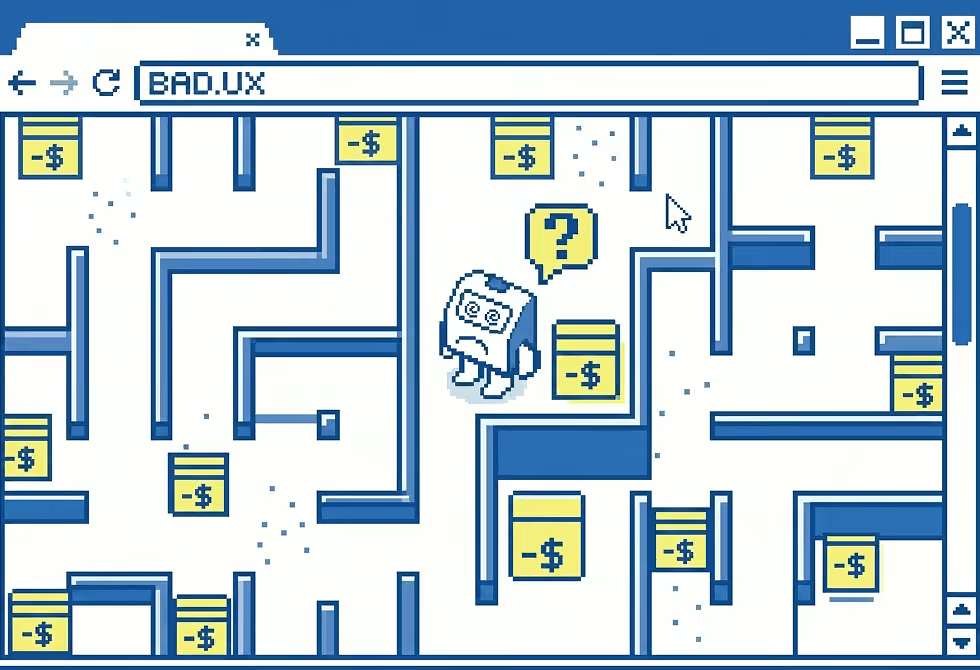
But it’s doing just the opposite. Rather than ramping up their productivity, many AR teams find these software tools trap them in a maze of clunky interfaces and disjointed workflows. Simple tasks—like applying a payment or sending a reminder—become multi-step ordeals.
It’s frustrating for all involved, but more importantly, it’s a resource drain. Every extra keystroke, manual workaround, and duplicated effort costs you time and money.
But bad UX doesn’t need to hold you back. Let’s break down exactly where AR software is failing teams and how AI-driven platforms can fix it for good.
The true cost of bad UX in AR
1. Manual data entry & reconciliation: A productivity black hole
Ask a group of AR specialists what eats up the most time in their days, and you’ll likely hear a common refrain: manual data entry. Four out of ten finance leaders cite “manual collections processes” as their biggest AR challenge.
Traditional AR platforms relegate teams to the role of data janitors. Hours vanish each week as they:
- Manually enter invoice details instead of focusing on high-value tasks
- Hunt down payments and try to match them to the right invoices
- Engage in endless back-and-forth over missing remittance details, disputes, and reconciliation errors
For enterprises processing thousands of invoices monthly, this is a productivity black hole. Plus, the more manual work involved, the greater the risk of human error.
The AI fix: Let machines handle the tedious work
Next-gen AR platforms eliminate these inefficiencies through the power of AI agents. These intelligent systems go beyond basic automation to adapt, predict, and take action before minor issues escalate into full-blown crises.
Automated invoice creation
AI agents pull in data from contracts, POs, and past transactions to auto-generate invoices with zero manual entry. If a key detail is missing, the AI auto-fills it based on historical data or flags it for review before the invoice goes out.
Smart payment matching
AI agents scan remittance details, bank records, and invoice data to instantly pair payments with the right invoice. And, if transaction details are incomplete, they can even suggest the most likely invoice, slashing reconciliation time.
Real-time reconciliation
AI agents work behind the scenes to flag discrepancies in real time: duplicate payments, missing details, potential disputes, etc.. If something looks off, the system suggests a fix or routes the issue to the right person automatically.
AI as a proactive assistant
Instead of forcing teams to spot issues themselves, AI brings the problems to them before they escalate. For example:
- “Invoice #1023 has missing line items. Would you like me to auto-fill based on previous transactions?”
- “Customer X has a 5-day overdue payment. Would you like me to send a smart reminder with a payment link?”
2. Payment delays: The domino effect of human error
If you’re creating invoices by hand, some amount of typos—a wrong digit in a PO number here, a missing tax code there—are inevitable. A study by the Journal of Accountancy found that “human error rates in manual data entry can range from 1% to 5%.”
But with traditional AR software, a single slip-up can grind payments to a halt. Without any built-in safeguards, all teams can hope for is to catch errors as they happen.
When they don’t, they’re left with a cascading set of problems:
- The invoice gets rejected. A missing PO number, incorrect amount, or formatting issue sends it back to square one.
- AR teams drop everything to make corrections. Collections take a backseat as your team scrambles to fix errors and resend invoices.
- Days sales outstanding (DSO) creeps up as payments stall, impacting cash flow and working capital.
And that’s just the financial fallout. The customer experience suffers, too. At a certain point, customers won’t put up with surprise disputes or constant, unnecessary back-and-forth—too much friction, and they’ll start questioning the relationship. At scale, this is a revenue problem waiting to happen.
The AI fix: Prevent errors in the first place
These problems are hard to reverse once they’ve already delayed payments and strained relationships. That’s why AI-powered AR systems are designed to prevent them from happening in the first place.
Auto-validated invoices
AI checks every detail against contracts, POs, and past transactions before an invoice goes out to minimize rejections.
Instant error detection
Missing data? Mismatched fields? AI flags issues in real-time so teams can fix them immediately—not after they’ve already wreaked havoc.
Predictive risk alerts
AI identifies high-risk accounts and patterns in late payments, giving finance teams a heads-up before an issue turns into a dispute.
The impact goes beyond just avoiding mistakes, though. AI frees up AR teams to focus on strategy rather than constant firefighting. In fact, a Stuut case study found that AI-powered automation reduced AR processing time by 60%, allowing finance teams to reclaim 10+ hours per week for high-value work like forecasting, customer relationship management, and process optimization.
3. Onboarding & integration: The silent revenue killer
Getting AR software up and running should be a quick win. Instead, traditional platforms often drag teams through months of setup hell—custom coding, endless IT back-and-forth, and integrations that never quite work the way they should.
By the time everything is finally live, cash flow improvements have been sitting on ice for months. And even then, these systems struggle to keep up with the rest of your tech stack:
- Integrations take forever: Legacy AR tools need custom APIs, manual IT intervention, and constant maintenance just to sync with ERPs, CRMs, and banking platforms. One broken connection, and the whole process comes to a standstill.
- Data gets stuck in silos: With no seamless sync, finance teams spend hours manually reconciling data between systems, increasing the risk of errors, duplicate payments, and missed transactions.
- Teams struggle with confusing software: AR teams end up stuck in weeks of training, trying to figure out how to use their own software. In the end, they often end up spending more time troubleshooting than actually improving collections.
The AI fix: AR that works out of the box
AI-powered AR platforms like Stuut let teams skip the setup nightmare and get up and running in no time.
Instant integration
AI-driven platforms seamlessly connect with ERPs, CRMs, and banking systems within hours—not months. No more custom coding, no more waiting.
Data that actually syncs
AI agents auto-map data across systems, eliminating manual reconciliations, duplicate records, and missing payments.
Smart automation from day one
Instead of making finance teams build workflows from scratch, AI adapts to existing processes, making automation intuitive from the start.
Minimal training required
AI-powered UX means teams don’t need weeks to ramp up. They can start optimizing collections immediately.
AI UX is the future of AR
AR software was supposed to make life easier. Instead, clunky interfaces and endless manual work make it just one more system to wrestle with—costing teams time, money, and sanity.
But it doesn’t have to be this way. AI-driven platforms like Stuut redefine UX by making AR:
✅ Nearly hands-free: Automation takes care of busywork, giving your team the bandwidth to focus on more value-adding tasks.
✅ System-integrated: AI keeps everything in sync across ERPs, CRMs, and banking platforms. No more data silos. No more manual reconciliations.
✅ Frictionless: Setup takes hours, not months. Just plug in and go.
Stop fighting your AR tools. Chat with Stuut today to learn how AI agents can streamline your AR process from end to end.